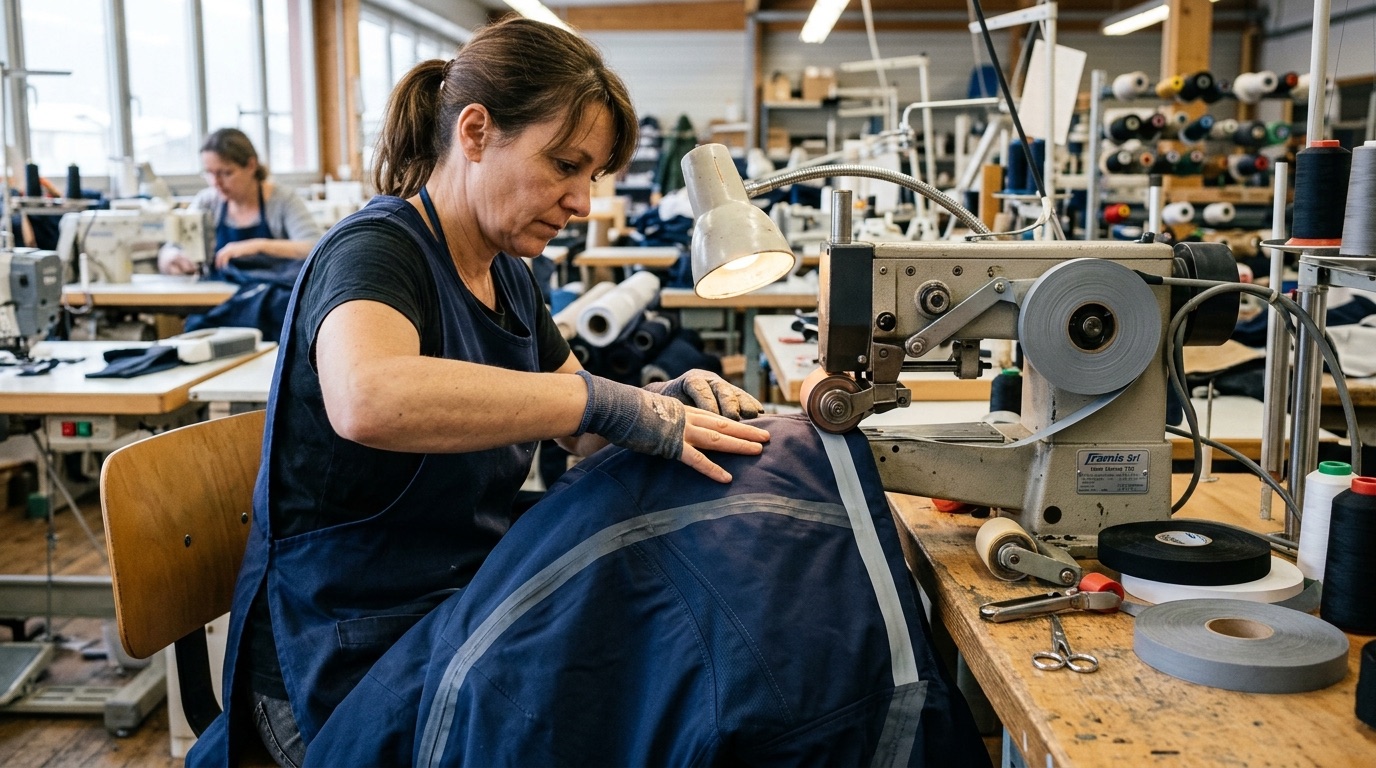
Seam tape can support a weather-protection design, but the phrase fully seam sealed does not define a production-ready result. A factory still needs to know which seams are included, which tape belongs with each material, how wide the application should be, how curves and multi-layer intersections are handled, what happens around zippers and pockets, and which test or inspection releases the construction. Without that detail, two samples can both appear taped while representing different coverage, methods, and risks.
A controlled seam-sealing specification connects the garment's intended use, panel and seam map, membrane package, tape identity, application parameters, construction sequence, workmanship standard, test route, repair policy, and bulk records. ZM Exports documents membrane options, sealed-seam construction, buyer-selected seam tape, and technical quality checkpoints within made-to-spec ski-wear development. Actual waterproofing or breathability performance, equipment settings, tape compatibility, test values, minimums, lead times, and bulk results remain product-specific and require an approved material package and agreed evidence.
Key takeaways
- Define the garment use and required protection zones before choosing full, critical, or another buyer-approved seam-sealing scope.
- Issue a coded seam map that includes joins, intersections, pocket bags, zippers, vents, hood, cuffs, hem, and snow-interface details.
- Approve tape, membrane, lining, reinforcement, thread, adhesive, and application method as one compatible construction system.
- Set inspection and test conditions with named methods, specimens, acceptance rules, repair limits, and approval authority.
- Release the current seam map, materials, machine settings, sample, evidence, and repair standard together before bulk production.
1. Define the use case and seam-sealing scope
Name the product, wearer, activity, garment layer, climate direction, exposure duration, movement, carried equipment, wash route, destination, and any buyer or market requirement that affects construction. Separate the intended product outcome from a guaranteed claim. Terms such as waterproof, storm-ready, or breathable require an agreed target, unit, test method, specimen, condition, and evidence before they can function as an acceptance rule.
Choose and define the sealing scope for the specific style. Full seam sealing, critical seam sealing, selective sealing, bonded construction, or another route should never rely on industry shorthand alone. State which zones are included, which are excluded, why each exception exists, and whether the decision applies to the shell, lining, insulation package, detachable parts, hood, powder skirt, gaiter, or another component.
- Product brief
- Style, wearer, use, layer, exposure, movement, equipment, care, destination, and applicable requirements are named.
- Protection intent
- The buyer states the construction purpose without treating an untested intention as a performance guarantee.
- Coverage route
- Full, critical, selective, bonded, or mixed construction has an exact product-specific definition.
- Exceptions
- Every excluded seam, component, opening, or detachable part has a recorded rationale and approver.
2. Build a coded seam and exposure map
Mark every relevant seam on front, back, side, inside, and detail drawings. Give each seam or continuous sealing route a stable code linked to the construction specification and operation sequence. Show panel joins, yokes, shoulders, sleeves, armholes, side seams, inseams, seat seams, hood joins, cuffs, hems, waistband areas, powder skirts, gaiters, pockets, vents, zipper installations, drawcord exits, adjustment tabs, reinforcement patches, label attachment, and any needle penetration that needs a decision.
Review the map as a three-dimensional garment, not only as flat artwork. Tape must navigate curves, corners, seam allowances, cross seams, bulky intersections, folded edges, hardware, elastic, insulation, facings, and narrow access points. Identify start and stop locations, overlap direction, minimum coverage over stitching, branch sequence, inaccessible areas, and visible inside surfaces. Record whether a design change is required where reliable application cannot be achieved with the proposed pattern or assembly order.
- Seam codes
- Each join, opening, penetration, and continuous route links drawings, construction instructions, inspection, and repair records.
- Exposure zones
- Shoulder, hood, sleeve, body, pocket, vent, cuff, hem, seat, knee, gaiter, and snow-interface areas are reviewed.
- Application geometry
- Curves, corners, allowances, overlaps, intersections, bulk, access, and visible surfaces are mapped.
- Pattern response
- The buyer and factory resolve zones that require a revised seam position, allowance, reinforcement, or assembly route.
3. Approve the membrane, tape, and component system
Identify every shell or contrast material by source, item code, construction, face, membrane or coating, backer, weight basis, thickness, finish, color, and approved lot or swatch reference where applicable. Identify the seam tape by supplier or source, code, width, color, layer construction, adhesive system, storage requirement, shelf-life basis, and supplier application guidance. Do not approve compatibility because the tape and fabric look similar or because either worked on a different style.
Review the complete assembly around the sealed seam: thread, needle route, seam allowance, reinforcement, binding, zipper tape, pocketing, lining, insulation, elastic, hook-and-loop, reflective detail, print, transfer, label, adhesive, and hardware. A finish, coating, surface texture, contamination, color, thickness, or multi-layer transition can change adhesion or appearance. Define trials for each materially different combination and keep substitutions subject to written review and new evidence where required.
- Shell identity
- Source, code, construction, face, membrane, backer, weight, thickness, finish, color, and lot reference are traceable.
- Tape identity
- Source, code, width, color, construction, adhesive, storage, shelf-life basis, and supplier guidance are recorded.
- Assembly system
- Thread, seam, reinforcement, zipper, pocketing, lining, insulation, elastic, decoration, labels, and hardware are considered.
- Change control
- Alternative fabric, tape, finish, width, color, supplier, process, or component cannot inherit approval automatically.
4. Define the seam construction and application method
For each seam code, specify the seam and stitch formation, seam allowance, thread, needle or penetration requirement, allowance direction, trimming, grading, opening, topstitching, reinforcement, and preparation before tape application. State whether the seam must lie open, to one side, or within a particular profile. Control loose thread, oil, dust, chalk, moisture, coating damage, folds, puckering, skipped stitches, and excessive bulk before sealing begins.
Record the approved machine or equipment route and the controlled application parameters required by the selected material system. These may include temperature, pressure, speed or dwell, nozzle or roller arrangement, cooling, tape tension, garment support, start and stop treatment, overlap, centering, and operator handling. Use values proven during the approved trial rather than copying generic settings from another fabric. Define how settings are checked, recorded, and adjusted when material, environment, machine, or seam geometry changes.
- Seam preparation
- Construction, allowance, thread, needle route, trimming, cleaning, drying, flattening, and defect checks are defined.
- Equipment route
- Machine, attachment, roller or nozzle, support method, operator qualification, and setup verification are controlled.
- Approved parameters
- Temperature, pressure, speed or dwell, cooling, tension, centering, overlap, and handling come from the represented trial.
- Process record
- Style, seam code, material lot, tape lot, machine, settings, operator, time, condition, and check result remain traceable.
5. Control intersections, openings, and difficult details
Create detail drawings for every transition that cannot be understood from the main seam map. Cover cross seams, three-way joins, curved hood seams, collar joins, zipper ends, pocket corners, vent ends, drawcord exits, adjustment tabs, reinforcement edges, cuff closures, hem channels, gaiter joins, powder-skirt attachments, and areas where tape crosses another tape. Show the order of application, trimming, overlap, patch shape, corner radius, clearance, and final appearance.
Check that sealing does not block a zipper, stiffen a flex zone, trap a cord, cover a label, interfere with insulation loft, create uncomfortable bulk, distort a curve, damage a membrane, or compromise the intended pocket or vent opening. Where a needle penetration is added after sealing, decide whether it requires a patch, liquid sealant, revised operation sequence, or explicit approved exception. Confirm the method on the production-intent sample rather than relying only on a diagram.
- Intersection library
- Cross seams, curves, zipper ends, pocket corners, vents, cords, cuffs, hems, gaiters, and skirt joins have approved details.
- Sequence
- Tape order, overlap, trimming, patching, turning, lining, insulation, hardware, and closure operations are coordinated.
- Function review
- Movement, bulk, stiffness, comfort, zipper travel, pocket use, venting, adjustment, and insulation are checked.
- Late penetrations
- Labels, bartacks, snaps, tabs, patches, and repairs added after sealing have a defined disposition.
6. Set workmanship, inspection, and repair standards
Define the visible and functional workmanship standard using an approved sample and detail photographs. Inspect tape centering, stitch coverage, width, continuity, overlap, edge lift, bubbling, wrinkling, tunnelling, scorching, shine, discoloration, adhesive squeeze, contamination, skipped areas, bridging, distortion, delamination, and damage to the shell or backer. State the viewing side, lighting, distance, garment condition, and inspection stage so decisions are repeatable.
Create a repair standard before production starts. Identify which defects may be reworked, the permitted tape removal or patch method, maximum patch size or frequency where relevant, cleaning and reapplication steps, retest requirement, appearance limit, and authority for accepting or rejecting the repaired area. A repair should not be hidden from records simply because it passes a quick visual check; repeated defects may indicate a material, setting, preparation, geometry, or training issue that needs corrective action.
- Visual standard
- Centering, coverage, edges, overlaps, surface, color, damage, adhesive, bubbles, wrinkles, and continuity are defined.
- Inspection stage
- First piece, in-line, before lining closure, pre-final, final, and post-test checks are assigned where applicable.
- Repair limits
- Removal, patching, reapplication, size, frequency, appearance, retest, approval, and rejection rules are explicit.
- Corrective action
- Recurring findings trigger review of material, preparation, settings, access, geometry, equipment, or training.
7. Agree the test route and sample review
Write each required evaluation as a complete instruction: purpose, standard or internal method, specimen, garment or seam location, preparation, conditioning, wash or aging sequence, test equipment, units, target, tolerance, sample quantity, laboratory or responsible party, report format, failure response, and approval authority. Distinguish material-level evidence, seam-level trials, hydrostatic or leakage-related checks, laundering or durability evaluations, and complete-garment reviews. One result should not be applied to a different construction that it did not represent.
Review the sample inside and outside, at rest and through the intended movement. Confirm the seam map, tape identity, application settings, intersections, appearance, comfort, flexibility, lining and insulation relationship, openings, hardware, and repairs. Record sample size, colorway, fabric and tape lots, machine, operator, date, photos, test reports, deviations, comments, and status. If a shower, spray, pressure, wash, or field-related evaluation is used, document exactly what it can and cannot prove.
- Method
- Purpose, standard, specimen, preparation, condition, equipment, unit, target, tolerance, and quantity are named.
- Evidence scope
- Material, seam trial, component, and complete garment results apply only to represented constructions and conditions.
- Sample trace
- Size, color, materials, lots, machine, settings, operator, date, photos, reports, repairs, and deviations are retained.
- Decision
- Approved, approved with conditions, revise, hold for evidence, or rejected has an owner and written basis.
8. Release the approved seam-sealing system to bulk
Before bulk cutting and line start, issue one current package containing the product brief, coded seam map, pattern and construction revisions, material and tape specifications, supplier guidance, approved trials, machine route, settings, detail library, inspection standard, test plan and reports, repair limits, approved sample, exceptions, approvers, and effective date. Remove superseded versions from active use and ensure production, quality, technical, sourcing, and buyer contacts are working from the same release.
Verify the first production piece for every represented material and critical construction before the line continues. Check bulk fabric and tape identity, lot condition, storage, seam preparation, settings, coverage, intersections, appearance, repairs, and required tests. Maintain in-line and final records by style, color, size, material lot, tape lot, machine, operator, defect, repair, and disposition. Reconfirm compatibility, settings, evidence, and availability for substitutions, new colorways, later orders, or process changes rather than assuming the previous approval still applies.
- Release pack
- Brief, map, patterns, materials, tape, trials, settings, details, inspections, tests, repairs, sample, and exceptions agree.
- First-piece gate
- Each material combination and critical detail is verified before broader line continuation.
- Bulk traceability
- Lots, machines, settings, operators, inspections, tests, defects, repairs, decisions, and shipments remain connected.
- Revalidation
- Substitution, color, reorder, storage, equipment, setting, pattern, seam, tape, or supplier changes trigger defined review.
To plan a ZM Exports ski-wear seam-sealing sample, share the garment and use brief, shell and membrane references, coded seam map, required sealing scope, preferred tape or supplier guidance, seam and detail drawings, zipper and pocket construction, lining and insulation package, intended tests and acceptance rules, target sample date, and authorized approval contacts through the Request a Quote page or established project channel.