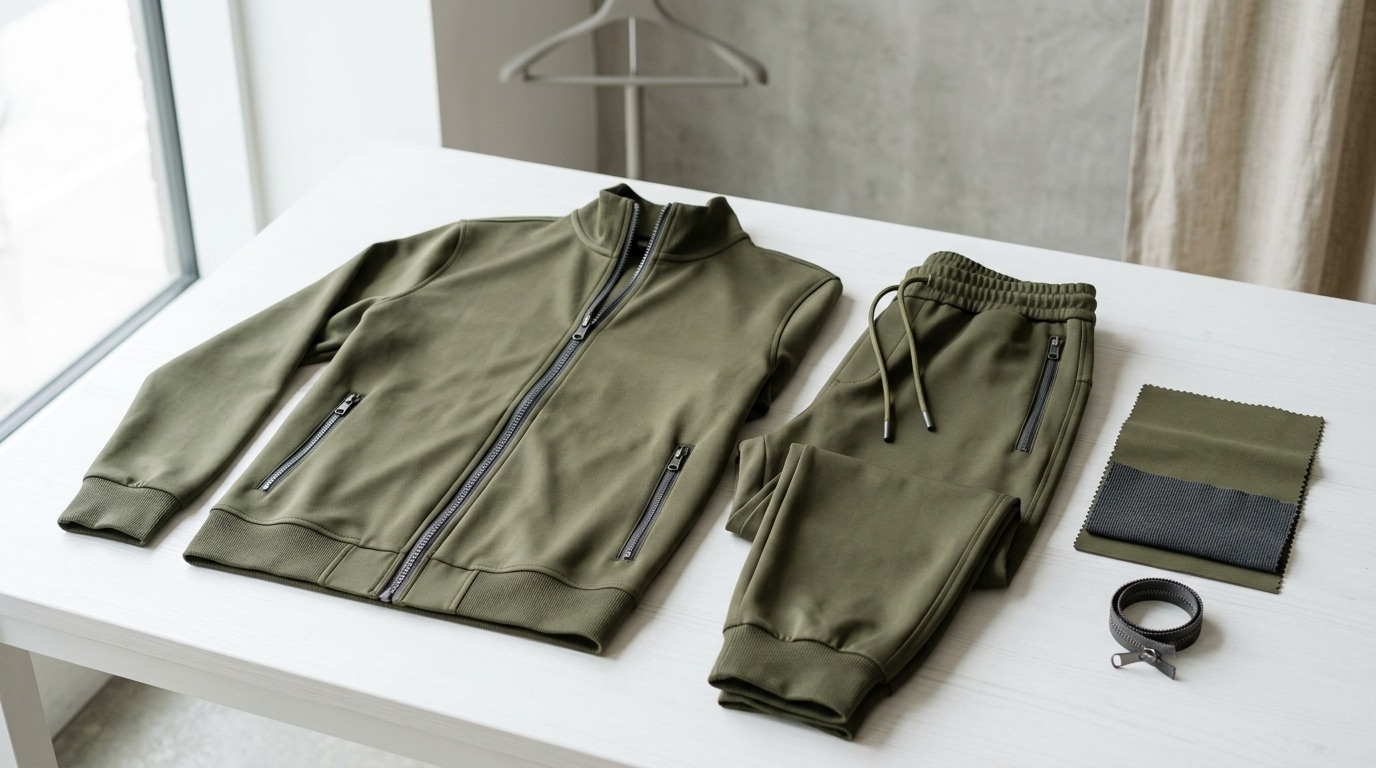
A waistband and rise determine where a bottom sits, how it balances through the front and back, how it responds while moving, and how it relates to pockets, fly or closure, lining, inseam, seat, leg, and hem. A note such as elastic waist or mid rise does not define the finished position, rise measurement method, waistband height, elastic length, drawcord route, opening, stretch, recovery, stitch, grade, or approved worn result. Small changes can make a bottom roll, twist, slip, pinch, gap, pull at the seat, restrict movement, or change the intended silhouette.
A controlled waistband specification connects product use and wearer movement to the body and waistband pattern, rise, materials, support, construction, fit review, tests, approved sample, and bulk controls. ZM Exports documents garment construction, samples, and quality checkpoints within made-to-spec apparel development. Actual dimensions, materials, tests, minimums, costs, lead times, and results remain project-specific and require written approval.
Key takeaways
- Define the wearer, fit position, rise, size range, layers, movement, and intended waistband behavior before pattern approval.
- Control finished waist, front and back rise, waistband height, elastic, drawcord, opening, pocket and closure interfaces, and grade rules from stable references.
- Approve shell, waistband material, elastic, drawcord, eyelets, lining, interfacing, thread, labels, and finishing as one represented assembly.
- Review comfort, grip, stretch, recovery, rolling, twisting, rise, seat, pocket access, movement, and appearance on a physical sample.
- Release the represented patterns, materials, construction, fit standard, evidence, accepted alternatives, and first-piece checks together.
1. Define waistband use and the approval decision
Identify the style, wearer, intended fit, size range, garment layer, activity, underlayers, care route, destination, and development stage. State whether the feature is a fixed waistband, elasticated waistband, rib waistband, drawcord waistband, fly front, side opening, shaped yoke, high rise, mid rise, low rise, maternity route, or another buyer-approved configuration.
List what the sample must prove: finished position, coverage, comfort, grip, stretch, recovery, rise, seat balance, pocket access, closure operation, drawcord behavior, movement, layering, care response, and appearance. Separate design intent from any performance claim that requires a named method and evidence.
- Product context
- Style, wearer, fit, size range, activity, layers, care, destination, and stage are identified.
- Approval decisions
- Fit position, rise, comfort, grip, movement, recovery, access, and appearance are explicit.
- Worn states
- Relaxed, seated, bent, stretched, layered, open, closed, and cared-for states are considered.
2. Map the complete waistband and rise system
Show front, back, side, inside, relaxed, stretched, open, and closed views as applicable. Give stable codes to body, front rise, back rise, waistband, facing, elastic, rib, drawcord, eyelet, cord exit, fly, closure, pocket, yoke, lining, interlining, reinforcement, seam, topstitching, label, and other style-specific parts. Use the same codes in patterns, bill of materials, construction notes, sample comments, and inspection records.
Map how the waistband meets center seams, side seams, fly or closure, pockets, yoke, lining, belt loops, drawcord channel, elastic join, labels, decoration, inseam, seat, and surrounding garment. Show folds, overlaps, seam allowances, matching points, opening clearances, and areas that must remain free. Identify operations that must occur before the channel or waistband closes access.
- Part map
- Waistband, rise, elastic, drawcord, opening, pockets, yoke, lining, support, and closures have codes.
- Interface map
- Center, side, fly, pocket, lining, label, seat, and leg interfaces are coordinated.
- Visible states
- Relaxed, stretched, open, closed, inside, and worn views have approved shape and alignment rules.
3. Control patterns, measurements, ease, and grading
Create controlled measurement points for finished waist, waistband height, front rise, back rise, hip, seat, crotch length, opening, elastic length, drawcord length, fly length, pocket clearance, and other product-relevant dimensions. State whether values are measured flat, on edge, folded, relaxed, stretched, worn, or after care. Define grain or stretch direction, seam allowances, notches, balance marks, and matching points.
Set the relationship between waist, rise, hip, seat, inseam, leg, lining, layers, stretch, and movement. Define how waist circumference, rise, waistband depth, elastic, drawcord, opening, fly, pocket clearance, and shape change across sizes. Review the smallest and largest represented sizes rather than assuming one waistband proportion will work throughout the range.
- Measurements
- Waist, waistband depth, rise, hip, seat, opening, elastic, drawcord, fly, pocket, and clearance are defined.
- Pattern data
- Piece codes, direction, allowances, notches, balance, curves, folds, and matching points are controlled.
- Grade
- Waist, rise, depth, elastic, drawcord, opening, fly, pocket, and size-group rules are reviewed across sizes.
4. Approve waistband materials and components
Identify shell, contrast, rib, elastic, drawcord, cord end, eyelet, lining, mesh, interlining, reinforcement, facing, binding, tape, thread, zipper, snap, hook-and-loop, label, and other components by controlled code. Record construction, weight or thickness basis, face, color, finish, stretch, recovery, shrinkage, direction, dimensions, care, and approved swatch or assembly.
Review the complete package for drape, stretch mismatch, recovery, bulk, edge curl, abrasion, snagging, heat response, pressing, color migration, skin contact, cord security, eyelet clearance, closure clearance, and compatibility with decoration, washing, or finishing. A material approval applies only to the represented waistband assembly; substitutions require written review.
- Material identity
- Shell, rib, elastic, drawcord, lining, support, eyelets, thread, closures, and labels are controlled.
- Direction
- Grain, stretch, recovery, face, nap, fold, left-right pairing, and cut direction are explicit.
- Compatibility
- Drape, stretch, bulk, curl, abrasion, heat, color, skin, care, decoration, and finish are reviewed together.
5. Define construction and assembly sequence
Specify edge finish, fold, facing, rib join, elastic route and join, drawcord channel, eyelet, fly or closure, pocket interface, lining attachment, reinforcement, binding, topstitching, seam, thread, allowance, and approved appearance. Define where easing is distributed, which areas may stretch, and which edges must remain stable. A waistband should be specified as a complete fit and support system, not only as a finished circumference.
Document the sequence with center seams, side seams, pockets, fly or closure, labels, lining, reinforcement, drawcord insertion, elastic joining, turning, pressing, and final closing. Preserve access for adjustments and inspection. Prevent twisted elastic, uneven stretch, trapped drawcord, blocked openings, mismatched rise seams, exposed allowances, punctured materials, or marks created by pressing and handling.
- Construction
- Edges, folds, facings, rib, elastic, drawcord, opening, pockets, lining, support, stitch, and finish are specified.
- Shape control
- Easing, stretch, edge stability, curves, symmetry, turning, and pressing are defined.
- Sequence
- Seams, pockets, closures, labels, lining, support, drawcord, elastic, turning, pressing, and closing are coordinated.
6. Review fit, movement, recovery, and appearance
Fit the waistband with approved layers, pockets, closures, and footwear where relevant. Review neutral posture, sit, bend, walk, squat, step, lift, stretch, and other product-relevant actions. Check finished position, rise, coverage, seat comfort, waistband roll, elastic distribution, drawcord access, pocket access, closure operation, pressure, and whether the garment returns to its intended position.
Inspect inside and outside in relaxed, stretched, open, closed, seated, and worn states. Review balance, symmetry, waistband wave, twist, curl, roping, puckering, elastic recovery, cord routing, eyelet alignment, rise seam behavior, lining show, pocket placement, pressure, abrasion, snagging, and appearance. Record measurements in the approved condition and compare them with the physical fit standard.
- Movement
- Sit, bend, walk, squat, stretch, coverage, rise, access, grip, and recovery are reviewed.
- Fit interfaces
- Waist, rise, hip, seat, pockets, closure, lining, layers, and leg remain compatible.
- Appearance
- Balance, symmetry, wave, twist, stitch, elastic, drawcord, rise, pocket, lining, and surface are reviewed.
7. Agree tests, defect limits, and repair rules
Define each required material, component, assembly, or garment evaluation with purpose, method or buyer protocol, specimen, zone, preparation, movement state, cycles or exposure, equipment, unit, target, tolerance, quantity, responsible party, report, and approver. Relevant checks may address dimensional change, stretch and recovery, seam behavior, cord security, closure operation, abrasion, care, or material response where the brief requires it.
Write defect and repair limits for wrong waist or rise, uneven depth, twisted or waved waistband, elastic growth, uneven drawcord, poor eyelet, lining show, exposed allowances, puckering, roping, missed stitches, closure misalignment, pressure, stains, and appearance. Define permitted opening, replacement route, remeasurement, refit, retest, and approval authority.
- Test definition
- Purpose, method, specimen, condition, movement, cycles, equipment, unit, target, tolerance, report, and approver are named.
- Defect standard
- Waist, rise, grip, stretch, recovery, edge, elastic, drawcord, closure, comfort, and appearance have limits.
- Repair route
- Eligibility, opening, part replacement, resewing, pressing, closing, remeasurement, refit, retest, and appearance are controlled.
8. Release the approved waistband and rise system to bulk
Issue one current package containing the product and movement brief, waistband map, materials and components, approved swatches and assemblies, patterns, grade and measurement rules, rise and construction details, fit comments, workmanship limits, tests and reports, repair rules, approved fit sample, accepted alternatives, exceptions, approvers, recipients, and effective date. Remove superseded patterns, components, comments, and samples from active use.
Verify the first production piece for each represented waistband type, material combination, stretch or support package, opening or closure configuration, size group, and high-risk interface before broader line continuation. Check identity, lots, cutting, pattern direction, construction, lining, elastic, drawcord, openings, operation, fit, movement, measurements, appearance, tests, repairs, and records. Revalidate substitutions, new lots, revised patterns or sizes, machine or sequence changes, later orders, and components held beyond their approved condition.
- Release pack
- Brief, map, materials, components, patterns, grades, construction, fit, tests, and approved sample agree.
- First-piece gate
- Each waistband type, material combination, support package, opening configuration, size group, and critical interface is verified.
- Bulk control
- Lots, cutting, direction, construction, opening, movement, inspection, tests, repairs, and holds remain traceable.