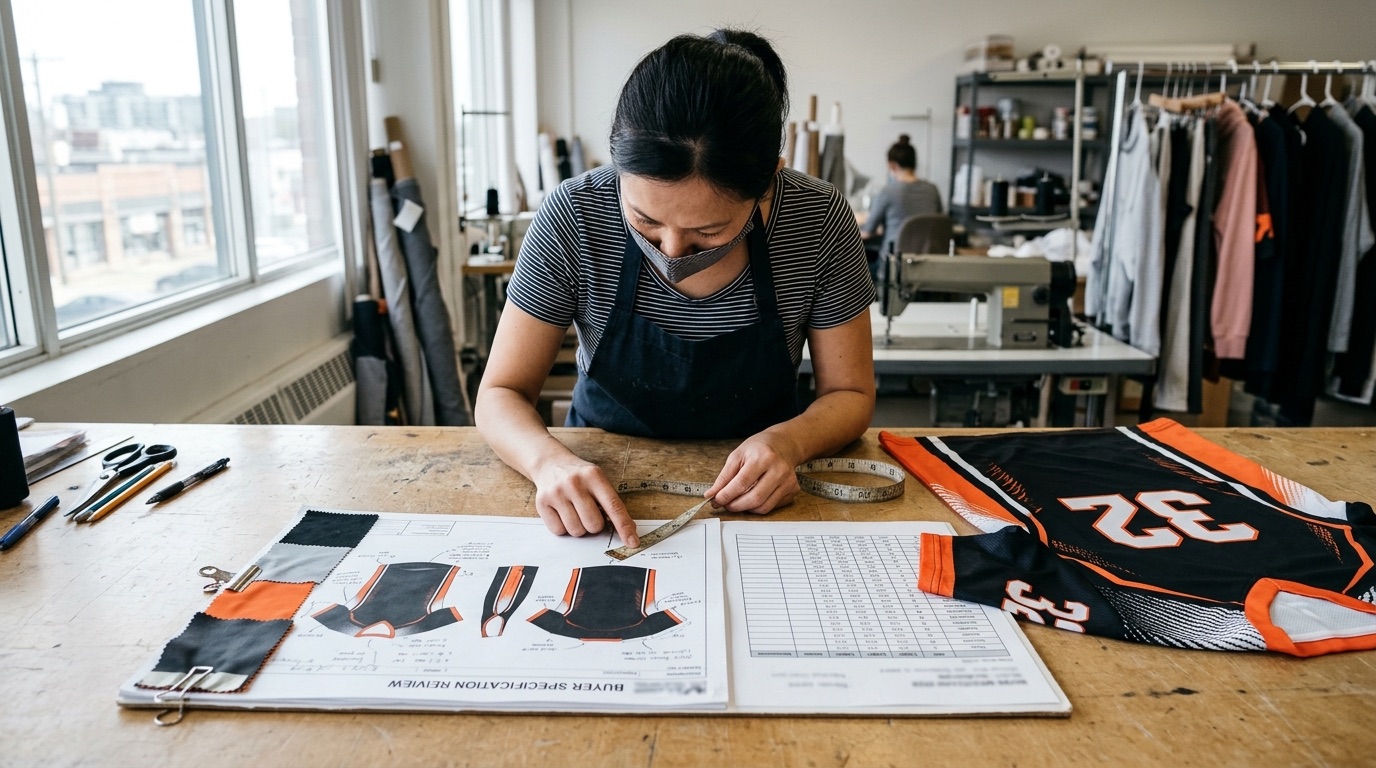
Shoulder seams and yokes are not only visual lines. They control how the front, back, neckline, sleeve, lining, insulation, pockets, and layers meet around a high-movement area. A note such as back yoke or forward shoulder seam does not define seam position, curve, panel balance, grain direction, seam allowance, reinforcement, topstitching, grade rule, or approved worn result. Small differences can create drag, neckline shift, sleeve restriction, uneven panels, twisting, or an unbalanced silhouette.
A controlled shoulder specification links product use to the body pattern, yoke map, material system, assembly sequence, fit review, tests, approved sample, and bulk controls. ZM Exports documents garment construction, samples, and quality checkpoints within made-to-spec apparel development. Actual dimensions, materials, tests, minimums, costs, lead times, and results remain project-specific and require written approval.
Key takeaways
- Define wearer, layers, activity, shoulder line, yoke purpose, fit intent, and approval conditions before pattern approval.
- Control seam position, panel shape, grain, notches, seam allowances, balance marks, measurements, and grade rules from stable references.
- Approve shell, yoke, lining, support, reinforcement, thread, labels, and finishing as one represented assembly.
- Review posture, reach, lift, layer interaction, neckline position, sleeve mobility, seam comfort, and appearance on a physical sample.
- Release the represented patterns, materials, construction, fit standard, evidence, accepted alternatives, and first-piece checks together.
1. Define shoulder and yoke use
Identify the style, wearer, fit, size range, garment layer, activity, underlayers, care route, destination, and development stage. State whether the feature is a set-in shoulder seam, forward shoulder, dropped shoulder, raglan interface, back yoke, front yoke, western yoke, reinforced panel, or another buyer-approved configuration.
List what the sample must prove: balance, shoulder position, neckline relationship, sleeve mobility, layer clearance, seam comfort, carrying interface, reinforcement behavior, appearance, and care response. Separate design intent from any performance claim that requires a named method and evidence.
- Product context
- Style, wearer, fit, layers, activity, care, destination, and stage are identified.
- Approval decisions
- Position, balance, movement, comfort, reinforcement, appearance, and layer interaction are explicit.
- Worn states
- Relaxed, reaching, lifting, seated, layered, and cared-for states are considered.
2. Map the complete shoulder and yoke system
Show front, back, side, inside, relaxed, layered, and worn views. Give stable codes to front body, back body, yoke, shoulder seam, neck, armhole, sleeve, facing, lining, insulation, reinforcement, label, seam, topstitching, and other style-specific parts. Use the same codes in patterns, bill of materials, construction notes, sample comments, and inspection records.
Map how the yoke meets the neckline, armhole, sleeve, collar or hood, lining, pockets, straps, decoration, labels, and body panels. Show curves, overlaps, seam allowances, matching points, panel direction, and areas that must remain free. Identify operations that must occur before a yoke or lining closes access.
- Part map
- Body panels, yoke, seams, sleeve, neck, lining, support, labels, and stitching have codes.
- Interface map
- Neckline, armhole, sleeve, collar or hood, lining, pockets, decoration, and labels are coordinated.
- Visible states
- Front, back, inside, layered, relaxed, and worn views have approved rules.
3. Control patterns, measurements, and grading
Create controlled measurement points for shoulder length, seam position, yoke depth, panel width, curve, neckline relationship, armhole relationship, seam angle, reinforcement placement, and other product-relevant dimensions. State whether values are measured flat, on seam, on edge, worn, or after care. Define grain or stretch direction, seam allowances, notches, balance marks, and matching points.
Set how shoulder length, yoke depth, panel shape, seam position, reinforcement, and clearances change across sizes. Review the smallest and largest represented sizes rather than assuming a single shoulder proportion works throughout the range.
- Measurements
- Length, position, depth, width, curve, seam angle, armhole, neck, and reinforcement are defined.
- Pattern data
- Piece codes, direction, allowances, notches, balance, and matching points are controlled.
- Grade
- Shoulder, yoke, seam, reinforcement, and size-group rules are reviewed across sizes.
4. Approve shoulder materials and support
Identify shell, contrast, yoke, lining, mesh, insulation, interlining, reinforcement, tape, thread, label, binding, and other components by controlled code. Record construction, weight or thickness basis, face, color, finish, stretch, recovery, shrinkage, direction, dimensions, care, and approved swatch or assembly.
Review the complete package for drape, stretch mismatch, recovery, bulk, abrasion, heat response, pressing, color migration, skin contact, carrying interfaces, and compatibility with decoration, sealing, washing, or finishing. A material approval applies only to the represented shoulder assembly; substitutions require written review.
- Material identity
- Shell, yoke, lining, support, reinforcement, tape, thread, binding, and labels are controlled.
- Direction
- Grain, stretch, recovery, face, nap, pairing, and cut direction are explicit.
- Compatibility
- Drape, bulk, abrasion, heat, color, skin, care, decoration, and finishing are reviewed together.
5. Define construction and assembly sequence
Specify seam type, allowance, reinforcement, tape, binding, lining attachment, topstitching, thread, pressing, and approved appearance. Define where easing is distributed, which edges may stretch, and which must remain stable. A yoke should be specified as a complete body-and-sleeve interface, not only as a panel shape.
Document the sequence with neck, collar or hood, sleeve, pockets, decoration, labels, lining, insulation, binding, pressing, and final closing. Preserve access for adjustment and inspection. Prevent twisted panels, mismatched shoulders, trapped lining, uneven topstitching, blocked access, exposed allowances, or marks created by pressing and handling.
- Construction
- Seams, yoke, reinforcement, lining, support, binding, stitch, and finish are specified.
- Shape control
- Easing, stability, curves, symmetry, seam alignment, and pressing are defined.
- Sequence
- Neck, sleeve, pockets, decoration, lining, support, binding, pressing, and closing are coordinated.
6. Review fit, movement, and appearance
Fit the shoulder with approved layers, neckline, sleeve, collar or hood, and pockets. Review neutral posture, reach, lift, carry, bend, sit, walk, stretch, and other product-relevant actions. Check shoulder position, neckline stability, armhole behavior, sleeve movement, layer clearance, seam comfort, and whether the garment returns to its intended position.
Inspect inside and outside in relaxed, layered, stretched, and worn states. Review balance, symmetry, drag, twist, roping, puckering, seam allowance show, topstitching, lining behavior, pressure, abrasion, snagging, and appearance. Record measurements in the approved condition and compare them with the physical fit standard.
- Movement
- Reach, lift, carry, bend, sleeve mobility, neck position, and recovery are reviewed.
- Fit interfaces
- Neck, sleeve, armhole, collar or hood, layers, lining, pockets, and straps remain compatible.
- Appearance
- Balance, symmetry, seam, yoke, stitch, lining, surface, and panel alignment are reviewed.
7. Agree tests, defect limits, and repair rules
Define each required material, component, assembly, or garment evaluation with purpose, method or buyer protocol, specimen, zone, preparation, movement state, cycles or exposure, equipment, unit, target, tolerance, quantity, responsible party, report, and approver. Relevant checks may address dimensional change, seam behavior, attachment, abrasion, care, or material response where the brief requires it.
Write defect and repair limits for wrong seam position, uneven yoke, poor balance, twisted panels, exposed allowances, puckering, roping, missed stitches, poor reinforcement, pressure, stains, and appearance. Define permitted opening, replacement route, resewing, remeasurement, refit, retest, and approval authority.
- Test definition
- Purpose, method, specimen, condition, cycles, equipment, unit, target, tolerance, report, and approver are named.
- Defect standard
- Position, balance, seam, yoke, reinforcement, lining, comfort, and appearance have limits.
- Repair route
- Eligibility, opening, replacement, resewing, pressing, remeasurement, refit, retest, and appearance are controlled.
8. Release the approved shoulder and yoke system to bulk
Issue one current package containing the product and movement brief, shoulder map, materials and components, approved swatches and assemblies, patterns, grade and measurement rules, construction details, fit comments, workmanship limits, tests and reports, repair rules, approved fit sample, accepted alternatives, exceptions, approvers, recipients, and effective date. Remove superseded patterns, components, comments, and samples from active use.
Verify the first production piece for each represented shoulder or yoke type, material combination, reinforcement package, size group, and high-risk interface before broader line continuation. Check identity, lots, cutting, pattern direction, seam assembly, sleeve, lining, reinforcement, fit, movement, measurements, appearance, tests, repairs, and records. Revalidate substitutions, new lots, revised patterns or sizes, machine or sequence changes, later orders, and components held beyond their approved condition.
- Release pack
- Brief, map, materials, components, patterns, grades, construction, fit, tests, and approved sample agree.
- First-piece gate
- Each shoulder type, material combination, reinforcement package, size group, and critical interface is verified.
- Bulk control
- Lots, cutting, direction, construction, movement, inspection, tests, repairs, and holds remain traceable.