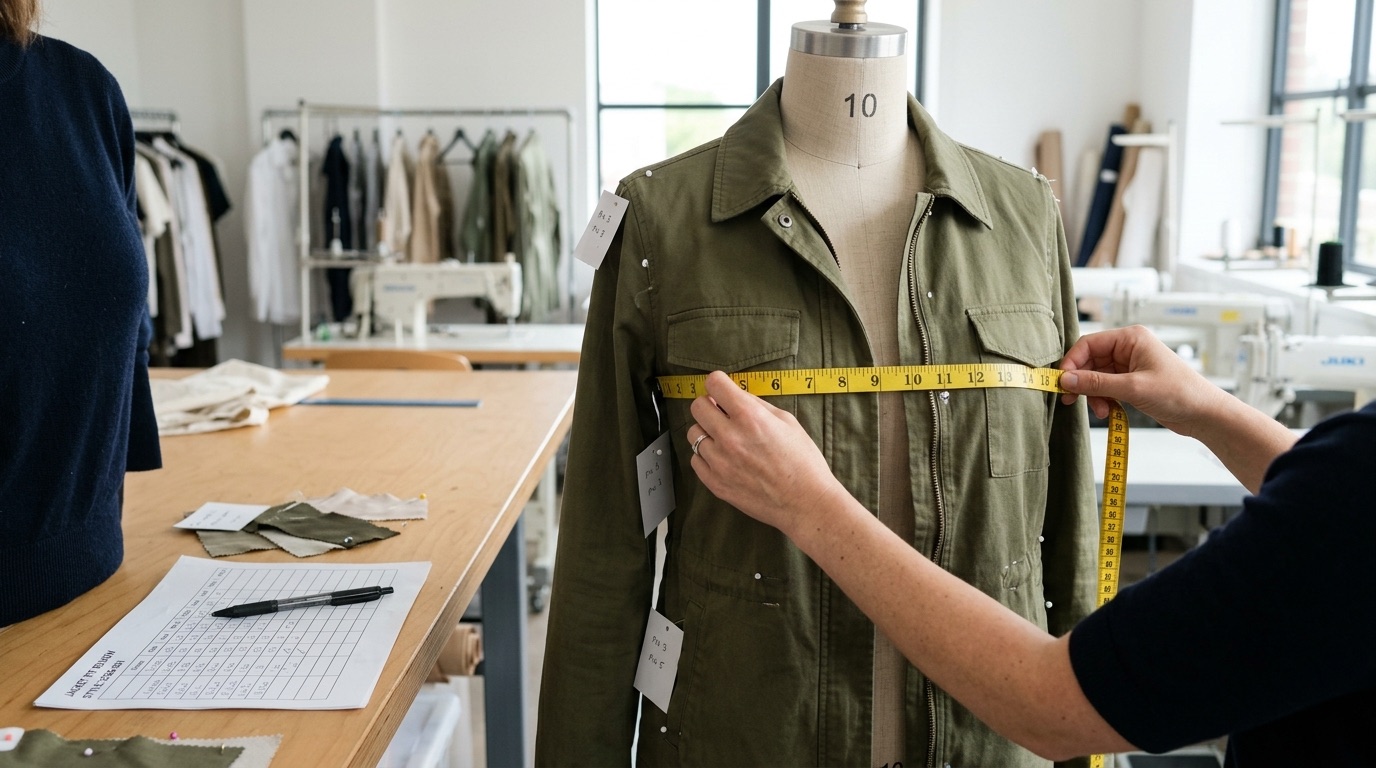
Receiving a sample is not the end of development. It is a decision point. The buyer must determine what the sample proves, what still needs to change, and whether the manufacturer has a clear written basis for the next sample or bulk production.
The most useful review separates fit, measurements, construction, materials, decoration, labels, and packing instead of giving one broad reaction such as “looks good” or “make it better.” A structured apparel sample approval checklist helps every stakeholder comment on the same version and turns feedback into actions that can be confirmed later.
Key takeaways
- Confirm the sample type, style number, size, colorway, and revision before reviewing it.
- Assess fit and measurements as separate but connected decisions.
- Write comments against exact locations, specification points, or numbered photographs.
- State whether each item is approved, revised, pending, or not applicable.
- Release bulk only against one current specification and a clear written approval record.
1. Confirm exactly which sample you are reviewing
Start with identification. Check the style number, product name, sample type, size, colorway, revision, and dispatch date against the sample label and the latest specification. A prototype, fit sample, size set, decoration trial, and pre-production sample do not answer the same questions, so the review must match the stated purpose.
Gather the current tech pack, measurement chart, bill of materials, artwork, previous comments, and any approved physical references before opening the review. Remove superseded files from the working folder. If the sample arrived with a change that was not recorded, mark it as an open item rather than assuming it is accepted.
- Identity
- Style, sample stage, size, colorway, version, and date all match.
- Review scope
- The team knows which questions this sample is intended to answer.
- Reference set
- Only the latest specification, comments, artwork, and approved standards are used.
If identification is unclear, pause the review and resolve the version first. Accurate comments on the wrong sample still create the wrong production instruction.
2. Review fit under consistent conditions
Fit review should reflect the intended wearer, layering system, and use case. Record the wearer or form measurements, the sample size, any base layers worn, and the intended silhouette. A close sportswear top, relaxed streetwear hoodie, hunting midlayer, and ski shell need different ease and movement decisions even when their chest measurement appears similar.
Observe balance, length, volume, mobility, and how the garment settles after movement. Check the front, back, side, arm position, neckline or hood, rise, seat, knee, cuff, and hem where relevant. Photograph the same views for each revision and identify the exact area being discussed. Avoid approving fit from a single front photograph or from an unrecorded verbal fitting.
- Context
- Intended wearer, base layers, use case, and target silhouette are recorded.
- Movement
- Reach, bend, sit, stride, or sport-specific movement is reviewed where relevant.
- Balance
- Front-to-back balance, seam position, drape, twisting, and garment hang are checked.
- Evidence
- Consistent photographs and concise notes show the location and direction of each change.
3. Measure the sample against the controlled specification
Fit is a visual and functional decision; measurements are the numerical record behind it. Measure each required point using the method shown in the tech pack. Compare the actual result with the target and agreed tolerance, then record the value rather than writing only “too small” or “too long.”
When a fit change is requested, update the related point of measure and consider connected dimensions. Increasing a chest circumference may affect armhole shape, sleeve position, panel width, or pocket placement. If a measurement is intentionally accepted outside the original target, revise the specification so the approved exception does not remain hidden in an email thread.
- Method
- The measuring position and technique match the diagram or written method.
- Result
- Target, actual measurement, difference, and tolerance are recorded together.
- Dependency
- Connected pattern, placement, and grading effects are considered before changing one value.
- Revision
- Accepted changes are entered into the current measurement chart and revision history.
4. Inspect construction and functional details
Review the garment from the outside and inside. Compare panel lines, seam types, stitch appearance, reinforcement, binding, lining, pocket bags, closures, elastic, drawcord routes, and edge finishes with the specification. Check left-to-right symmetry and confirm that functional components operate without snagging, distortion, or unintended restriction.
Use the product as intended during the review. Open every pocket and zip, adjust every cord or tab, test access while wearing the garment, and check whether hardware orientation makes sense. For layered or technical products, confirm how components overlap and whether movement exposes gaps or creates bulk. Record observations as product requirements, not as assumptions about how bulk will be made.
- Exterior
- Panel alignment, seam appearance, topstitching, pockets, closures, and symmetry.
- Interior
- Seam finish, lining, binding, pocket bags, reinforcement, labels, and loose components.
- Function
- Zips, snaps, cords, tabs, vents, articulation, and storage work in the intended use.
- Workmanship
- Any defect or correction is photographed, located, classified, and assigned an action.
5. Approve materials, color, trims, and decoration separately
A garment can fit correctly while still using an unapproved material or trim. Compare shell fabric, lining, rib, mesh, elastic, zips, snaps, cord, toggles, thread, labels, and packaging components with the bill of materials and approved references. Confirm handfeel, stretch direction, face and back, finish, weight direction, color, and intended placement where those attributes are part of the brief.
Review embroidery, print, transfer, patch, applique, or other decoration for finished size, position, orientation, color, coverage, handfeel, and interaction with seams or stretch. Keep artwork approval distinct from garment approval: approving placement does not automatically approve color, technique, or final production quality. Record any pending lab dip, strike-off, trim card, test, or buyer-supplied component.
- Materials
- Each fabric and trim matches its reference code, location, color, and approval status.
- Color
- Garment panels, thread, trims, labels, and decoration follow the approved colorway.
- Decoration
- Technique, dimensions, placement, orientation, colors, and substrate interaction are reviewed.
- Pending items
- Substitutions, trials, tests, or buyer-supplied components remain visibly open until approved.
Do not treat a sample as proof of an unstated performance result. Test methods, targets, material packages, reporting, and responsible parties must be agreed in writing where performance verification is required.
6. Check labels, product information, and packing inputs
Confirm the main label, size label, care label, country or destination information, hangtag, barcode, sticker, and other brand components against approved artwork and placement instructions. Review spelling, size designation, orientation, attachment method, and whether any temporary sample marking must be removed before the next stage.
If packing is within the sample scope, check folding, tissue, polybag, sticker position, assortment, carton marking, and any presentation requirement. A garment sample and a packing sample may be approved at different times. State that distinction clearly so product approval is not misread as approval of every label or packing component.
- Labels
- Artwork, wording, size, material, fold, attachment, and placement are confirmed.
- Codes
- Barcodes, stickers, style references, and size or color identifiers match the order data.
- Presentation
- Fold, inserts, polybag, hangtags, and visible brand details follow the accepted brief.
- Boundary
- Approved, provisional, buyer-supplied, and not-yet-reviewed packing items are separated.
7. Turn every comment into a clear production action
Collect feedback from design, fit, merchandising, quality, and production stakeholders into one controlled comment file. Consolidate contradictions before sending it. Number each comment, identify the location, describe the observed issue, state the required action, and link it to a photograph, drawing callout, measurement point, artwork file, or material code.
Use direct language that can be checked. “Reduce finished sleeve length by the recorded amount and update POM SL-04” is more useful than “sleeves feel long.” Mark whether the manufacturer should change, confirm, propose an option, or leave the item as sampled. Set an owner for unanswered buyer decisions and keep a revision history showing what changed between rounds.
- Observation
- What was reviewed and what differs from the intended result.
- Location
- Exact panel, seam, point of measure, artwork, trim, or photograph reference.
- Action
- Change, retain, verify, propose, or hold—with the desired outcome stated.
- Control
- Owner, status, version, date, and affected specification pages are recorded.
8. Make an unambiguous approval decision
Finish the review with a written status: approved, approved with specified corrections, revise and resubmit, or held pending information. Define what the decision covers—fit, measurements, construction, materials, decoration, labels, packing, or the full sample. Do not rely on a thumbs-up message or a general statement when open items remain.
Before bulk release, assemble the accepted quotation, latest tech pack, measurement chart, bill of materials, artwork, sample comments, approved exceptions, packing instructions, and final authorization into one current record. Confirm whether a revised or pre-production sample is required. This record gives the buyer and manufacturer the same basis for production checks, later inspection, and change control.
- Approve
- The reviewed scope is accepted against the named version and references.
- Correct
- Defined corrections may proceed only when the agreed route allows them without resubmission.
- Resubmit
- A revised sample is required and the next review scope is stated.
- Hold
- Production does not advance until named information, material, test, or buyer decision is resolved.
- Release record
- One current document set and named authority control the bulk-production decision.
ZM Exports confirms sample type, revision scope, approval requirements, and bulk release conditions in the accepted project documents. Share your standards at quote stage so the review route is defined before development begins.