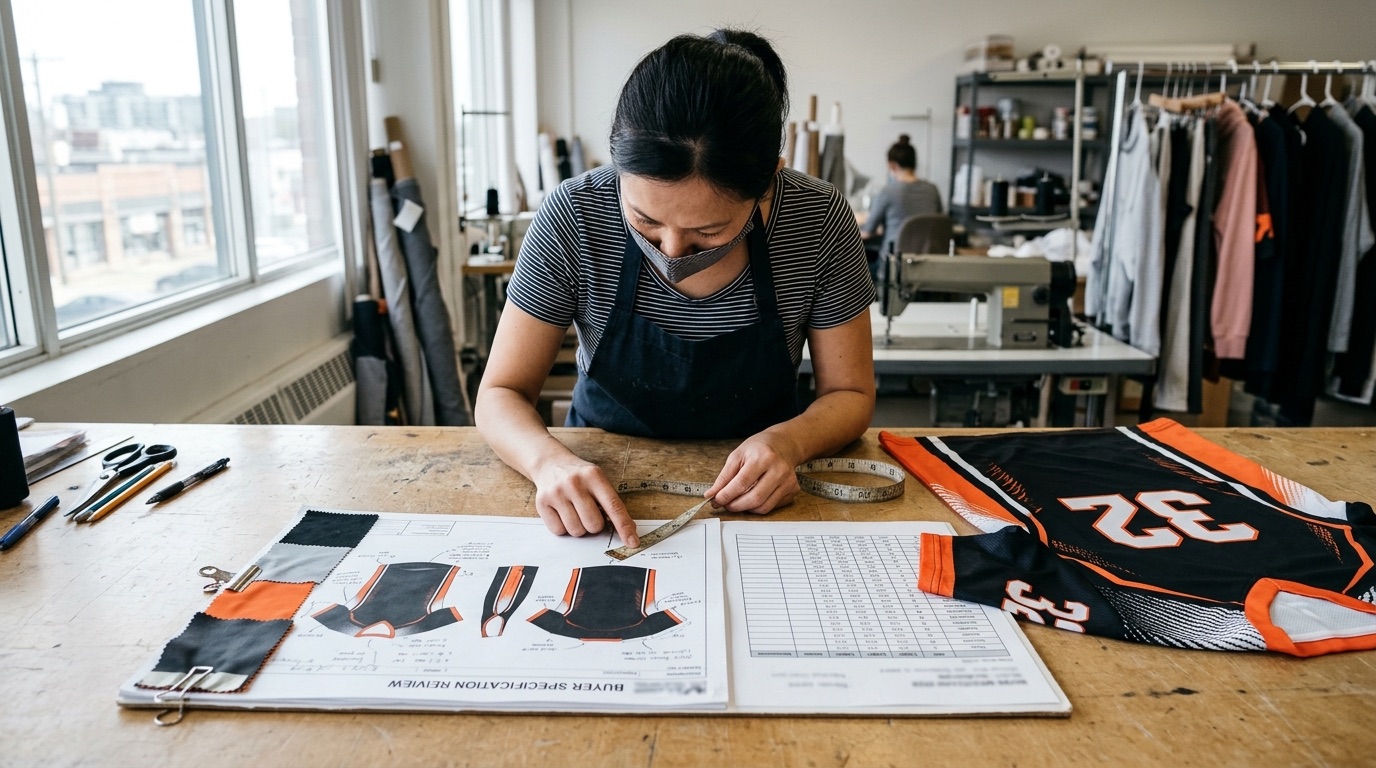
A pocket opening is a complete access system, not simply a line on a garment. It affects hand entry, item retention, body balance, lining behavior, closure clearance, decoration, and movement.
A controlled specification links the buyer's use case to patterns, materials, construction, sample review, and bulk controls. ZM Exports documents garment construction, samples, and quality checkpoints within made-to-spec apparel development. Actual dimensions, materials, tests, minimums, costs, lead times, and results remain project-specific and require written approval.
Key takeaways
- Define use, items, access, security, fit, and appearance.
- Control opening position, shape, dimensions, allowances, notches, and grade rules.
- Approve shell, pocketing, lining, closure, support, thread, and finish together.
- Review access, comfort, movement, retention, and appearance on a physical sample.
- Release current references and first-piece checks together.
1. Define pocket-opening use
Identify style, wearer, fit, size range, activity, carried items, layers, care route, destination, and development stage. State whether the feature is patch, welt, inseam, cargo, zip, snap, flap, hidden, or another buyer-approved configuration.
List what the sample must prove: access, opening reach, security, item retention, comfort, coverage, closure operation, movement, appearance, and care response.
2. Map the complete pocket system
Show front, back, side, inside, open, closed, relaxed, and worn views. Code body, opening, pocket bag, flap, closure, lining, reinforcement, seam, and topstitching consistently in patterns, bill of materials, comments, and inspection records.
Map interfaces with panels, waistband, hem, lining, closures, decoration, labels, and layers; show allowances, matching points, clearance, and access.
3. Control placement, patterns, and grading
Define opening position, length, width, angle, depth, bag dimensions, flap or closure position, reinforcement, and product-relevant points. State flat, open, closed, worn, or after-care measurement conditions.
Define grade rules for opening, placement, bag, closure, and clearances; review smallest and largest represented sizes.
4. Approve materials and components
Identify shell, pocketing, lining, mesh, closure, support, reinforcement, tape, thread, binding, and labels by controlled code. Record construction, face, finish, stretch, recovery, shrinkage, direction, dimensions, care, and approved assembly.
Review bulk, abrasion, snagging, heat, skin contact, closure clearance, color, and compatibility with decoration, washing, or finishing.
5. Define construction and assembly sequence
Specify edge finish, opening, pocket bag, flap, closure, reinforcement, lining attachment, binding, stitch, thread, pressing, and approved appearance.
Coordinate body seams, panels, lining, closures, decoration, labels, turning, pressing, and final closing to prevent twist, trapped lining, exposed allowances, blocked access, or weak reinforcement.
6. Review access, fit, movement, and appearance
Review hand entry, reach, sit, bend, walk, layers, carried items, closure access, coverage, and return. Check that pocket placement remains intended.
Inspect relaxed, open, closed, layered, and worn states for balance, symmetry, gap, twist, puckering, lining show, pressure, snagging, closure alignment, and appearance.
7. Agree tests, defect limits, and repair rules
Define required evaluations with purpose, buyer method, specimen, zone, preparation, state, cycles, equipment, target, tolerance, report, and approver.
Set limits for wrong placement, uneven opening, weak attachment, twist, missed stitches, closure issues, stains, and appearance; define repair, retest, and approval authority.
8. Release the approved pocket-opening system to bulk
Issue one current package containing brief, pocket map, materials, approved assemblies, patterns, grades, construction, fit comments, workmanship limits, tests, repair rules, approved sample, exceptions, approvers, and effective date.
Verify the first production piece for each pocket type, material combination, closure package, size group, and high-risk interface before broader continuation. Revalidate substitutions, lots, pattern revisions, and sequence changes.