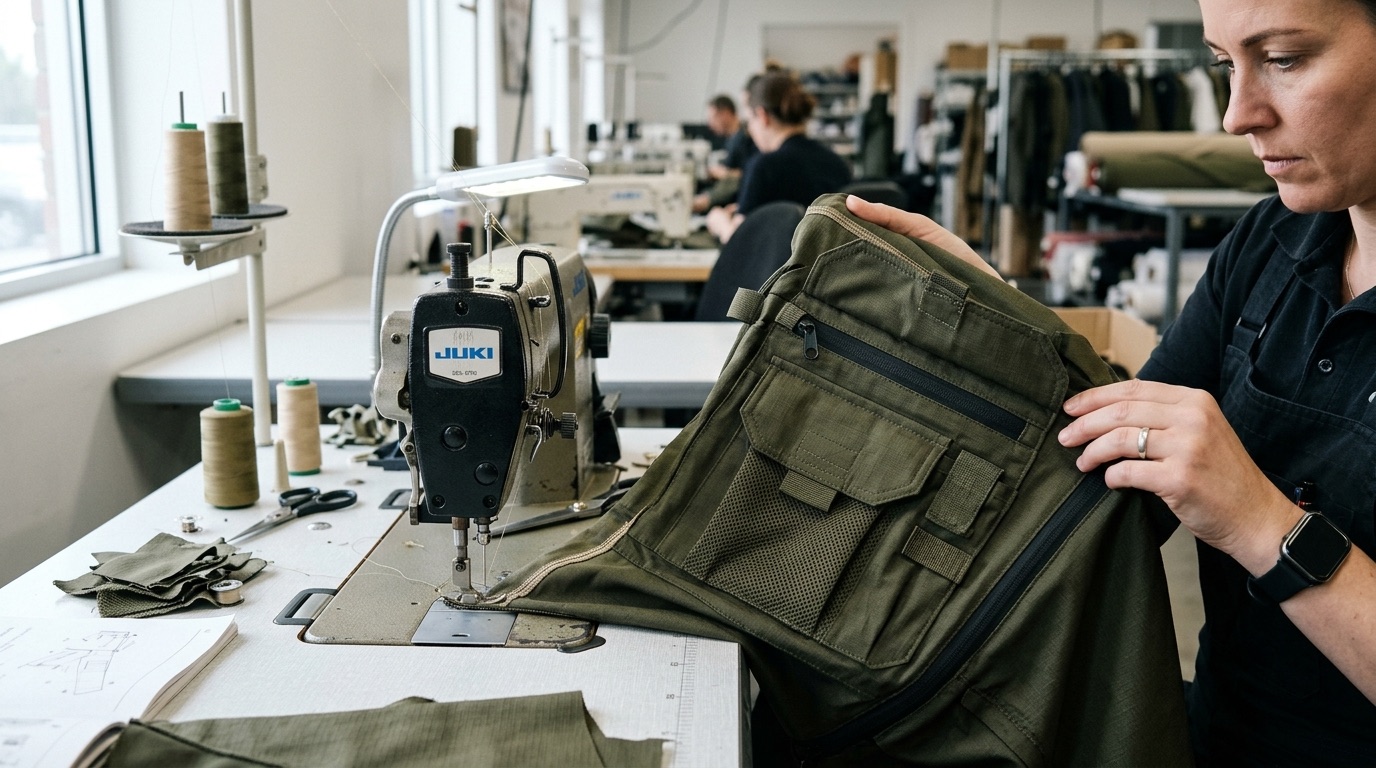
Linings and pocketing affect comfort, movement, dressing, opacity, internal appearance, storage, durability direction, moisture response, care, and access to the garment's construction. Notes such as polyester lining, mesh inside, or standard pocket bag do not identify the exact material, zone, pattern, ease, attachment, opening, reinforcement, seam finish, or performance evidence required. Two samples can look similar outside while behaving very differently inside.
A controlled specification connects each lining and pocketing zone to the shell, insulation or membrane where used, pattern and grade, construction sequence, fit and movement, pocket contents, workmanship standard, test plan, approved sample, and bulk records. ZM Exports documents linings, pocket bags, internal assemblies, sample approvals, and quality checkpoints within made-to-spec apparel development. Actual materials, constructions, dimensions, tests, minimums, costs, lead times, and results remain project-specific and require written approval.
Key takeaways
- Map every full, partial, mesh, pocket, guard, yoke, sleeve, hood, and access lining zone with a stable code.
- Approve the lining or pocketing with the shell, insulation, membrane, reinforcement, zipper, trim, thread, finish, and care route as one system.
- Create controlled patterns with ease, pleats, openings, notches, grain or stretch direction, seam allowances, and grade rules.
- Review comfort, movement, pocket access, usable storage, show-through, internal finish, measurements, and agreed tests on the physical sample.
- Release the represented materials, patterns, construction sequence, approved sample, evidence, and first-piece checks together.
1. Define the lining and pocketing function
Identify the style, wearer, fit, size range, garment layer, intended activity, shell package, care route, destination, and development stage. For each internal zone, state whether the material supports comfort, dressing, coverage, opacity, warmth distribution, ventilation, moisture direction, shell protection, seam concealment, storage, reinforcement, structure, or another approved result. Separate design intent from any measurable performance claim that needs a named method and evidence.
List the decisions the sample must prove. These may include slip over other layers, next-to-skin feel, mobility, lining hang, sleeve entry, pocket access, pocket capacity, retention, show-through, noise, bulk, heat or moisture comfort direction, seam coverage, turning access, care response, and inside appearance. Assign owners for design, materials, pattern, construction, fit, pocket function, tests, quality, commercial impact, and written approval.
- Product context
- Style, wearer, fit, size range, layer, activity, shell, care, destination, and stage are identified.
- Zone purpose
- Comfort, dressing, opacity, insulation support, ventilation, protection, storage, or reinforcement is explicit.
- Sample decisions
- Movement, access, capacity, retention, hang, noise, bulk, show-through, care, and appearance are listed.
- Authority
- Material, pattern, construction, fit, function, test, quality, cost, and release owners are named.
2. Map every lining and pocketing zone
Show internal front, back, side, sleeve, hood, collar, waistband, cuff, hem, vent, yoke, guard, facing, and pocket views. Assign stable codes to full linings, half linings, partial linings, mesh panels, drop linings, sleeve linings, pocket bags, security pockets, phone sleeves, coin pockets, zipper guards, insulation covers, reinforcement patches, binding, and access openings. Use the same codes in the bill of materials, patterns, construction table, sample comments, and inspection records.
Define boundaries, joins, overlaps, seam intersections, openings, pleats, tucks, vents, drain points, attachment lines, hang points, turning holes, service access, and areas intentionally left free. Map every pocket opening to its bag, divider, closure, anchor, reinforcement, and intended contents. Identify where internal work must be completed before the shell, lining, insulation, waistband, cuff, hem, or zipper construction closes access.
- Lining map
- Body, sleeve, hood, yoke, guard, facing, waistband, cuff, hem, vent, and partial zones have codes.
- Pocket map
- Opening, bag, divider, closure, anchor, reinforcement, drain, and contents remain connected.
- Internal details
- Joins, pleats, tucks, access holes, hang points, openings, and intentional free areas are shown.
- Sequence
- Decoration, pockets, zippers, insulation, shell closure, lining closure, and finishing dependencies are recorded.
3. Approve the complete internal material system
Record each lining and pocketing material by source or code where applicable, composition, construction, weight or other relevant basis, thickness, face and reverse, color, opacity, stretch direction, recovery, surface, hand, finish, coating, width, shrinkage basis, care direction, and approved lot or swatch. Distinguish body lining, sleeve lining, mesh, brushed or tricot surfaces, pocketing, reinforcement, binding, tape, and other materials instead of grouping unlike components under one generic lining entry.
Review the materials with the actual shell, insulation, membrane or coating, interlining, thread, zippers, hardware, labels, decoration, and finish. Check friction, cling, snagging, pilling direction, transparency, color migration, dye transfer, seam slippage direction, fraying, stretch mismatch, shrinkage, twisting, heat response, adhesive interaction, noise, odor, moisture retention, and contact feel where relevant. A fabric approval applies only to the represented material combination and condition.
- Material identity
- Source, code, composition, construction, weight, thickness, face, color, stretch, finish, lot, and swatch are controlled.
- Material roles
- Body, sleeve, hood, mesh, pocketing, reinforcement, binding, tape, and access materials are separated.
- Compatibility
- Shell, insulation, membrane, trims, thread, labels, decoration, finish, heat, and care are reviewed together.
- Substitution
- Changes to material, supplier, color, finish, construction, width, or lot follow a written reapproval route.
4. Control patterns, ease, pocket dimensions, and grading
Create coded production patterns for each lining, pocket bag, divider, guard, reinforcement, and access piece. State grain or stretch direction, face, quantity, pair, seam allowance, notch, drill, pleat, tuck, overlap, turnback, opening, closure line, attachment, and cut method. Define lining ease in relation to the shell so the inside supports movement and hang without pulling, sagging, twisting, catching, or showing below the garment edge.
Dimension each pocket's finished opening, usable depth, width, volume direction, bag shape, divider, closure, entry angle, and intended contents. Separate the visible outline from usable storage reduced by seams, zippers, flaps, reinforcements, or internal joins. Define how lining ease, pocket placement, opening, bag, reinforcement, and access change across sizes, and review the smallest and largest represented sizes before releasing the grade.
- Pattern data
- Piece code, size, quantity, pair, direction, face, allowance, notch, opening, pleat, attachment, and cut route are present.
- Ease
- Body, sleeve, hood, hem, vent, movement, and shell relationships have an explicit controlled basis.
- Pocket dimensions
- Opening, usable bag, depth, width, divider, closure, contents, and seam deductions are dimensioned.
- Grade
- Ease, openings, placements, bags, access, capacity, clearances, and attachment points work across sizes.
5. Define seams, attachment, access, and assembly sequence
Specify seams and stitches for lining joins, pocket bags, openings, dividers, reinforcement, zipper attachment, shell attachment, hem, cuff, waistband, hood, collar, vent, and final closing. Record seam allowance, thread, edge finish, topstitching where visible, bartacks or reinforcement, corner treatment, bag clean finish, and acceptable inside appearance. Control stress concentrations where pocket openings, zipper ends, hardware, or carried items transfer load into the lining or shell.
Document the assembly order. Show which pockets, labels, embroidery backing, cord systems, insulation, seam sealing, zippers, electronics or other approved components must be installed before lining closure. Define turning and service openings, closing method, inspection access, and whether any part remains replaceable. Prevent twisted sleeves, trapped pockets, caught pleats, blocked vents, reversed faces, raw edges, unsecured ends, and inaccessible defects.
- Seam specification
- Seam, stitch, allowance, thread, edge, reinforcement, corner, closure, and appearance are defined by location.
- Load path
- Pocket openings, zipper ends, anchors, hardware, contents, and reinforcements transfer force into suitable layers.
- Access
- Turning, service, inspection, repair, replacement, and final closing routes are identified.
- Sequence
- Pockets, labels, decoration, cords, insulation, sealing, zippers, shell, lining, and finish operations are coordinated.
6. Review fit, comfort, movement, and pocket function
Inspect the garment outside and inside in the stated condition. Check lining hang, balance, ease, pleats, attachment, shell impression, edge show, sleeve entry, arm movement, reach, bending, sitting, layering, hem behavior, vent operation, bunching, riding, twisting, cling, noise, pressure, abrasion, and contact feel. Confirm that internal labels, joins, zipper tape, reinforcements, hardware, and access closures do not create unintended discomfort or visible distortion.
Operate each pocket using the intended hand, garment position, closure state, layers, gloves where relevant, and representative contents. Review access, opening size, bag capacity, retention, divider use, load balance, sagging, print-through, contents movement, drainage direction, interference with fit or other features, and behavior when sitting or moving. Measure affected garment points and pocket dimensions using the approved method before and after agreed care or finish exposure.
- Internal fit
- Hang, ease, entry, reach, layering, hem, vent, bunching, twist, cling, pressure, and shell effects are checked.
- Comfort
- Surface, seams, labels, tapes, reinforcement, hardware, moisture, noise, heat, and contact areas are reviewed.
- Pocket function
- Access, opening, usable capacity, retention, dividers, load, movement, drainage, and interference are tested.
- Measurements
- Garment and pocket points, condition, method, timing, tolerance, size, result, and decision are recorded.
7. Agree tests, defect limits, and repair rules
Define each required material, assembly, or garment evaluation with its purpose, method or buyer protocol, specimen, zone, preparation, conditioning, care cycles, equipment, unit, target, tolerance, quantity, responsible party, report, and approver. Relevant checks may address dimensional change, color behavior, seam strength or slippage direction, abrasion, pilling or snagging direction, pocket attachment, zipper interaction, moisture response, opacity, or another product requirement. Do not convert an informal hand check into an unstated performance claim.
Write defect limits for holes, runs, snags, fraying, open seams, raw edges, skipped stitches, puckering, twisted lining, caught pleats, uneven hang, visible lining, shade mismatch, staining, print-through, unsecured ends, weak pockets, incorrect bags, blocked openings, trapped components, loose closures, contamination, and repairs. Define which findings may be corrected, the permitted route and attempts, remeasurement or retest, appearance limit, and approval authority.
- Test definition
- Purpose, method, specimen, condition, cycles, equipment, unit, target, tolerance, quantity, report, and approver are named.
- Defect standard
- Material, seam, edge, hang, twist, show, pocket, closure, contamination, and inside-appearance limits are explicit.
- Repair route
- Eligibility, access, opening, replacement, resewing, closing, remeasurement, retest, and appearance are controlled.
- Corrective action
- Repeated findings trace to material, pattern, ease, cutting, construction, sequence, equipment, handling, or training.
8. Release the approved lining and pocketing system to bulk
Issue one current package containing the product brief, zone and pocket maps, material specifications, approved swatches, patterns, ease and grade rules, construction and sequence, pocket dimensions and contents, measurements, fit and function comments, tests and reports, workmanship limits, repair rules, approved sample, exceptions, approvers, recipients, and effective date. Remove superseded materials, patterns, comments, standards, and samples from active use.
Verify the first production piece for every represented material combination, size group, pocket type, and high-risk internal zone before broader line continuation. Check lots, storage, cutting, direction, patterns, ease, assembly, attachments, pockets, closures, access, internal finish, measurements, movement, tests, repairs, and records. Revalidate substitutions, new colors or lots, pattern or sequence changes, later orders, and materials held beyond their approved condition.
- Release pack
- Zones, materials, swatches, patterns, ease, grades, construction, pockets, measurements, tests, and sample agree.
- First-piece gate
- Each material combination, size group, pocket type, and critical internal zone is verified before continuation.
- Bulk control
- Lots, storage, cutting, direction, assembly, inspection, measurements, tests, repairs, holds, and releases remain traceable.
- Revalidation
- Material, supplier, color, lot, pattern, size, pocket, sequence, care, or reorder changes trigger defined review.