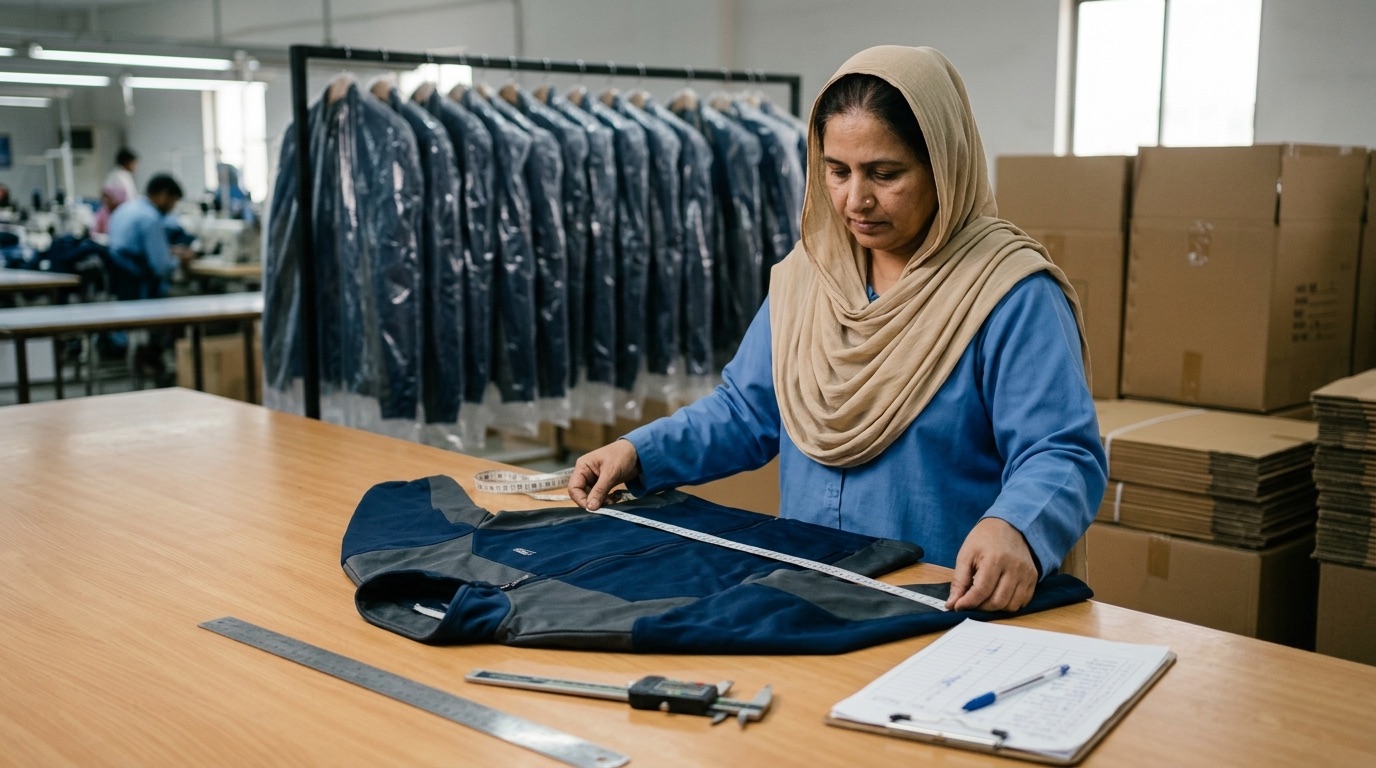
A sewn garment is not ready for packing simply because its seams are complete. Loose threads, chalk or adhesive residue, handling marks, distorted seams, unwanted shine, pressure impressions, trapped moisture, flattened insulation, crushed trims, or inconsistent folding can change the product a buyer approved. Pressing can improve presentation, but the wrong heat, steam, pressure, contact surface, or shape can also create damage that is difficult to reverse.
A controlled finishing standard translates the approved sample and product specification into repeatable cleaning, trimming, pressing, shaping, inspection, repair, and handover instructions. ZM Exports publishes finishing, measurement checking, inspection, packing, and written approval controls within its made-to-spec process. Actual finishing methods, equipment settings, tolerances, testing, repair limits, packing conditions, and approval responsibilities remain product- and order-specific and should be confirmed in accepted project records.
Key takeaways
- Approve one representative finishing standard for the exact style, colorway, material package, decoration, trims, wash state, and packing method.
- Write cleaning and thread-trimming limits clearly so operators remove production residue without cutting stitches, damaging surfaces, or altering the garment.
- Control heat, steam, pressure, dwell, contact surface, vacuum, cooling, and garment shape by material and panel rather than using one universal press setting.
- Recheck appearance, function, moisture condition, and measurements after finishing and adequate rest, not only while the garment is warm or under tension.
- Release only traceable, inspected garments to packing; keep repairs, stains, damage, rejects, damp pieces, and unapproved deviations segregated.
1. Define the finishing scope and approved baseline
Identify the buyer, order, style, colorway, size range, destination, approved sample revision, material and trim specifications, decoration artwork, wash or treatment status, measurement chart, care information, packing method, finishing version, submission date, and intended production stage. State whether the standard applies after sewing, washing, decoration, repair, final assembly, pre-final inspection, or immediately before folding and packing.
List every required operation and decision: thread trimming, cleaning, stain treatment, chalk or adhesive removal, brushing, lint removal, washing, drying, steaming, pressing, shaping, creasing, folding preparation, moisture conditioning, measurement recovery, function checking, repair, and release. Name who develops the method, checks material compatibility, approves appearance, controls settings, verifies measurements, accepts repairs, and authorizes the handover to packing.
- Product baseline
- Order, style, color, size, sample, materials, trims, artwork, treatment, measurements, and pack method are current.
- Operation scope
- Cleaning, trimming, treatment, pressing, shaping, conditioning, checking, repair, and release are listed.
- Production stage
- The standard names when each operation occurs and which earlier or later process it depends on.
- Authority
- Method, compatibility, appearance, settings, measurements, repair, and release decisions have owners.
2. Map material, trim, and construction risks before finishing
Review every shell, lining, rib, elastic, mesh, membrane, coating, insulation, interlining, reinforcement, binding, tape, thread, zipper, snap, button, cord, label, patch, print, embroidery, reflective element, transfer, adhesive, and packaging contact area that may respond to heat, steam, moisture, pressure, solvent, friction, brushing, vacuum, or folding. Use confirmed supplier and product evidence where required instead of assuming that similar-looking materials behave alike.
Mark sensitive zones on the garment drawing and finishing instruction. Consider seam bulk, fused areas, laminated panels, waterproof or seam-sealed construction, brushed faces, pile or nap, stretch recovery, foam, padding, molded parts, plated hardware, screen print, heat transfer, embroidery backing, reflective film, coated zippers, and dimensional contrast between joined materials. Define a trial or test route when the intended method has not been represented by an approved sample.
- Material map
- Every fabric, lining, rib, elastic, coating, membrane, insulation, interlining, and reinforcement is identified.
- Trim map
- Hardware, cords, labels, patches, prints, embroidery, transfers, reflectives, adhesives, and finishes are included.
- Exposure
- Heat, steam, moisture, pressure, dwell, friction, solvent, vacuum, brushing, cooling, and folding risks are visible.
- Evidence
- Approved sample, supplier information, test, trial, result, limitation, and decision are linked where required.
3. Control thread trimming, cleaning, and surface preparation
Define which thread tails must be trimmed, the accepted remaining length where relevant, and areas where trimming too close could weaken a lock, bar tack, button attachment, embroidery, overlock, cover stitch, or seam end. Check inside and outside the garment, pockets, hood, waistband, cuffs, hems, plackets, zipper ends, labels, decoration backs, and concealed construction. Remove cut thread and lint so they do not become trapped in the fold or polybag.
Identify permitted methods for chalk, pen, oil, dirt, adhesive, backing, paper, stabilizer, loose fiber, dust, and other production residue. Record the spot-treatment product or process only after checking compatibility with the material, color, finish, print, coating, adhesive, and care direction. Control water rings, color loss, abrasion, shine, odor, residue, and recontamination. A cleaned garment should be rechecked after drying or conditioning rather than accepted while the treated area is still wet.
- Thread standard
- Visible and concealed locations, trimming limits, locking points, decoration, labels, and seam ends are covered.
- Residue list
- Chalk, pen, oil, dirt, adhesive, paper, backing, lint, loose fiber, dust, and handling marks are defined.
- Approved method
- Tool, treatment, contact, time, drying, compatibility, and safety instructions match the product.
- Recheck
- Color, surface, odor, ring, abrasion, shine, residue, dryness, and recontamination are inspected afterward.
4. Approve pressing, steaming, shaping, and crease requirements
Create a panel-by-panel finishing map showing whether each area is pressed, steamed, shaped, flattened, opened, rolled, protected, brushed, left unpressed, or given a permanent or temporary crease. Define the intended silhouette, seam position, edge, collar, lapel, hood, cuff, waistband, pocket, placket, pleat, hem, sleeve, leg, and fold preparation by comparing with the approved sample and product drawing.
Record the approved equipment, contact or non-contact method, temperature basis, steam level, pressure, dwell, vacuum, pad, cover cloth, form, support, direction, sequence, cooling, and rest conditions where needed. Settings should be confirmed for the actual production material and assembly. Protect against scorching, glazing, shine, color change, water marks, seam impressions, edge flattening, adhesive movement, delamination, puckering, growth, shrinkage, distortion, and moisture retention.
- Shape map
- Panels, seams, edges, collars, hoods, cuffs, waistbands, pockets, pleats, hems, sleeves, legs, and folds are defined.
- Method
- Contact, steam, form, press, hand shaping, brushing, protection, or no-press treatment is named by area.
- Settings
- Temperature basis, steam, pressure, dwell, vacuum, pad, cloth, support, sequence, cooling, and rest are controlled.
- Damage limits
- Scorch, shine, color change, marks, impressions, flattening, movement, puckering, growth, shrinkage, and distortion are checked.
5. Protect decoration, trims, coatings, and functional details
Mark every area that must not receive direct heat, steam, pressure, solvent, sharp contact, or abrasive cleaning. Protect prints, transfers, embroidery, badges, reflective elements, seam tape, membranes, coatings, zippers, pullers, snaps, buttons, buckles, toggles, elastic, cords, foam, insulation, molded parts, labels, and branded finishes according to the approved method. Use a suitable support or protective layer where the product evidence requires it.
After finishing, operate closures, pockets, adjusters, hoods, cuffs, waistbands, detachable parts, and other functional details. Check that steam or pressure has not blocked a pocket, flattened a cord, marked the opposite panel, transferred color, shifted artwork, loosened adhesive, distorted embroidery, damaged plating, changed stretch recovery, or compressed insulation. Any repair should repeat the relevant appearance, measurement, function, and compatibility checks.
- Protected zones
- Decoration, reflectives, tape, membranes, coatings, hardware, elastic, foam, insulation, labels, and branding are mapped.
- Barrier method
- Support, pad, cover, face direction, temperature, distance, contact, and handling limits are specific.
- Function check
- Closures, pockets, adjusters, openings, detachable parts, stretch, recovery, and insulation remain usable.
- Repair loop
- Corrected items repeat all affected appearance, dimension, adhesion, surface, and function checks.
6. Recheck appearance, moisture condition, and measurements
Allow the garment to cool, dry, relax, and recover for the agreed period and under the agreed condition before making the release decision. Review front, back, inside, seams, edges, folds, color relationships, surface, hand, drape, volume, symmetry, matching, and overall silhouette against the approved sample. Check for residual odor, dampness, condensation risk, treatment marks, shine, scorching, impressions, wrinkles, distortion, and contamination.
Measure the required points using the current chart and approved method after finishing, especially dimensions that can respond to heat, steam, tension, folding, washing, or shaping. Record actual results, tolerance, size, garment identity, method, condition, time after finishing, and decision. Do not force a warm or damp garment to the target measurement. When a correction changes shape or dimensions, allow recovery and measure again before packing.
- Conditioning
- Cooling, drying, relaxation, recovery time, environment, and handling state are defined before review.
- Appearance
- Silhouette, symmetry, seams, edges, folds, color, surface, drape, volume, wrinkles, marks, and contamination are checked.
- Moisture
- Dampness, odor, retained steam, treatment residue, and condensation risk are resolved before enclosure.
- Measurements
- Point, method, size, result, tolerance, condition, garment, timing, correction, and recheck are recorded.
7. Control finishing defects, repairs, and segregation
Classify finishing findings against the agreed quality plan. Record garment or bundle identity, style, color, size, defect, location, quantity, suspected cause, process stage, status, owner, and disposition. Separate garments that are clean and approved from those that are damp, stained, scorched, shiny, distorted, damaged, under-finished, over-pressed, incorrectly creased, out of measurement, awaiting repair, rejected, or pending buyer decision.
Define which findings may be corrected, the permitted method, the number or type of attempts allowed where relevant, and when the product must be rejected or escalated. Prevent repeated spot cleaning, pressing, steaming, brushing, or handling from creating new damage. Reinspect the complete affected area and connected features after repair, not only the original defect. Track recurring causes back to sewing, materials, decoration, washing, equipment, settings, handling, or training.
- Defect record
- Garment, style, color, size, location, issue, quantity, cause, stage, owner, status, and decision are traceable.
- Segregation
- Approved, damp, stained, damaged, distorted, repair, reject, and decision-pending garments cannot mix.
- Repair limit
- Permitted method, attempts, protection, escalation, rejection, and full reinspection requirements are defined.
- Cause control
- Repeated issues connect to material, sewing, decoration, wash, equipment, settings, handling, or training action.
8. Release the finished garment to packing with traceability
Issue a finishing release that names the order, style, colorway, size range, approved sample and standard revisions, treatment or wash state, finishing method, protected zones, measurement basis, inspection result, accepted exceptions, repair status, approver, quantity, packing recipient, and effective date. Where a representative finished sample controls bulk appearance and folding preparation, identify it clearly and keep superseded samples out of use.
Transfer only dry, clean, inspected, correctly shaped, measured, counted, and approved garments into the packing area. Maintain style, color, size, shade or lot, bundle, repair, and quantity identity through folding, tagging, bagging, assortment, and carton packing. Reconcile finished, approved, held, repaired, rejected, sampled, and transferred quantities. Retain settings, trials, approvals, defects, repairs, measurements, and release records for the agreed traceability period and reconfirm the basis for later colorways or reorders.
- Release basis
- Order, product, sample, standard, treatment, method, protection, measurements, inspection, exceptions, and approval align.
- Handover condition
- Garments are dry, clean, shaped, measured, counted, approved, and protected for the intended pack method.
- Traceability
- Style, color, size, shade or lot, bundle, repair, quantity, fold, bag, assortment, and carton identity continue.
- Reconciliation
- Finished, approved, held, repaired, rejected, sampled, packed, and transferred quantities are accounted for.
To plan a ZM Exports finishing-standard review, share the latest approved sample and specification, complete material and trim package, decoration and treatment details, sensitive zones, required garment shape and crease direction, measurement method and tolerances, cleaning and repair limits, intended fold and packing method, quality checkpoints, target packing date, and authorized approval contacts through the Request a Quote page or established project channel.